Profitable Growth: How to Scale Your Business Without Creating Chaos
“Most businesses don’t struggle to grow. They struggle to grow cleanly. Because growth exposes weaknesses that may have been hidden.”
— Krista Beavers
When you’ve lived in Central California long enough, you start to notice the rhythm of the seasons — especially when it comes to orchards and vineyards.
Every year, there’s a moment when things start to warm up just enough that trees and vines begin to push new growth. Buds appear. Leaves start to form. Everything looks like it’s coming to life.
To the casual observer, it’s exciting. It feels like progress.
But talk to any experienced farmer, and you’ll hear a very different perspective.
Early growth can be risky.
Because just as quickly as those warm days arrive, temperatures can drop again. A late frost. An unexpected cold snap. Or something completely unforeseen like the hailstorm we saw recently can damage that early growth before it’s strong enough to withstand it.
And even in the best conditions, growth alone isn’t enough.
Without proper pruning, trellising, and support, vines and trees don’t produce their best fruit. Growth becomes scattered. Energy gets spread too thin. And what looked promising early on doesn’t always translate into a strong harvest.
The growth wasn’t the problem.
The lack of structure was.
The same dynamic shows up in business more often than you might think.
Growth is exciting. New opportunities, increased demand, expanding teams ... it all feels like progress. But without the right systems, financial clarity, and capacity to support that growth, things can start to feel strained instead of successful.
Many businesses find themselves in this situation at some point. And that’s why I suggest changing the question from, “How do we grow?” to “How do we grow well?”
Why Growth Without Structure Creates Problems
Most businesses don’t struggle to grow.
They struggle to grow cleanly.
Revenue increases. Opportunities expand. The pipeline fills up. But behind the scenes, things start to feel tighter — more reactive, less predictable.
That’s because growth doesn’t create clarity.
It exposes what’s already there — weaknesses that may have been hidden.
For example, if systems are inconsistent, growth magnifies the inefficiencies. If financial visibility is limited, growth increases uncertainty. If roles and responsibilities aren’t clearly defined, growth creates bottlenecks.
And over time, that shows up in ways that are hard to ignore:
Margins begin to shrink.
Cash flow feels tighter than expected.
Teams feel stretched.
Leadership spends more time reacting than leading.
Growth without structure doesn’t scale success.
It scales stress.
Scaling Systems Before Scaling Sales
One of the most common patterns I see is this:
A business focuses on increasing sales …
before making sure the business is ready to support them.
At first, it works. Revenue grows. Momentum builds.
But eventually, the cracks start to show.
Billing gets delayed. Projects take longer than expected. Reporting lags behind reality. Decisions get made without full visibility.
And suddenly, growth feels heavier than it should.
Strong systems don’t slow growth — they make it sustainable.
That doesn’t mean overcomplicating things. It means making sure the core operational pieces of your business can keep up with where you’re going.
This includes having:
Clear, consistent financial reporting
Reliable billing and collections processes
Defined workflows across your team
Timely, usable data for decision-making
When those systems are in place, growth becomes something you can support — not something you’re constantly chasing to keep up with.
Cash Flow Confidence: The Foundation of Profitable Growth
One of the most overlooked realities of growth is that revenue can increase while cash flow becomes more strained.
It sounds counterintuitive, but it happens all the time.
As businesses grow, they often take on more upfront costs — hiring, materials, expanded operations — while waiting longer to receive payment. The gap between earning revenue and receiving cash widens.
That’s where uncertainty starts to creep in.
Not because the business isn’t performing, but because the timing isn’t aligned.
Cash flow confidence comes from understanding not just how much revenue you’re generating, but when that revenue actually turns into usable cash.
It allows you to make decisions — whether it’s hiring, investing, or expanding — without constantly second-guessing whether the timing will work.
Without that clarity, even strong growth can feel unstable.
But with it, growth becomes something you can manage with intention.
Pricing for Sustainability, Not Just Sales
Another area where growth can quietly work against a business is pricing.
In the push to grow, it’s easy to prioritize winning the work over evaluating whether the work is priced correctly.
Sometimes that shows up as underpricing to stay competitive. Other times it’s simply a matter of not revisiting pricing as costs increase or services evolve.
But over time, the impact becomes clear.
Revenue grows…
but profitability doesn’t follow.
Teams work harder…
but margins get tighter.
And what initially felt like momentum starts to feel like pressure.
Sustainable growth requires pricing that reflects both the value you deliver and the true cost of delivering it.
That means periodically stepping back to evaluate:
Whether your margins are consistent across services or offerings
Whether rising costs have been accounted for
Whether your pricing still supports your long-term goals
Because growth that isn’t profitable isn’t sustainable.
And the goal isn’t just to do more work, it’s to build a business that supports you, your team, and your future.
Building Capacity Before You Need It
Growth doesn’t just require more sales.
It requires more capacity.
And one of the biggest challenges for growing businesses is timing that capacity correctly.
Invest too early, and it can feel like unnecessary overhead.
Wait too long, and the business starts to feel stretched.
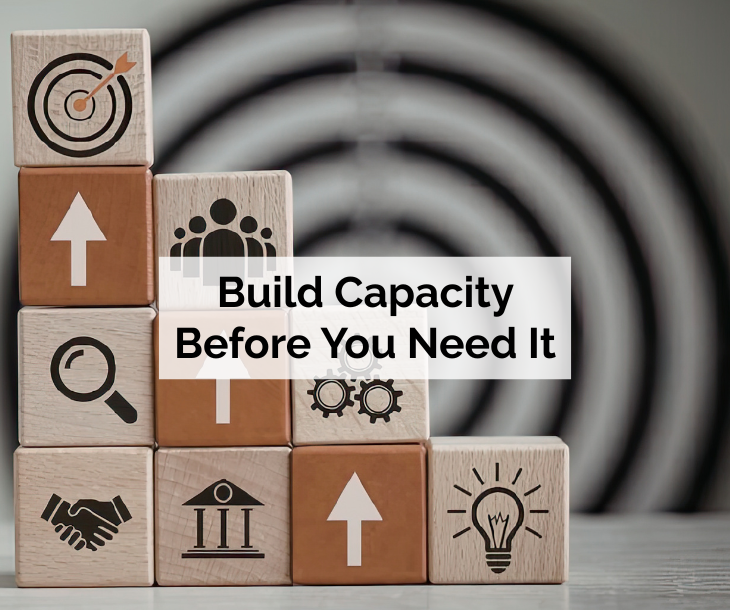
Capacity shows up in multiple ways, including:
Team capacity (having the right people in place)
Operational capacity (systems that support volume)
Financial capacity (having the resources to fund growth)
Leadership capacity (time and focus to make strategic decisions)
When capacity is limited, growth creates pressure.
Deadlines get tighter. Quality can slip. Leadership gets pulled into day-to-day problem solving instead of forward planning.
But when capacity is built intentionally — even just slightly ahead of demand — growth becomes much more manageable.
Just like in a vineyard, structure determines whether growth can be supported over time.
Connecting It All: Growth That Actually Feels Good
When systems, cash flow, pricing, and capacity are all working together, growth starts to feel different.
It’s less reactive. Less stressful. More intentional.
You’re not constantly trying to catch up.
You’re making decisions from a position of clarity.
And that changes everything.
Because profitable growth isn’t just about increasing revenue …
It’s about building a business that can sustain that growth — financially, operationally, and strategically.
Common Growth Traps to Avoid
As businesses move into a growth phase, a few common patterns tend to show up. Be on the lookout so you can avoid these situations that can end up holding you back or causing undue stress:
Increasing revenue without reviewing margins
Hiring reactively instead of planning ahead
Ignoring cash flow timing while focusing only on sales
Keeping pricing static while costs rise
Trying to scale everything at once
The goal isn’t to avoid growth.
It’s to approach it with intention.
Growth Should Feel Sustainable, Not Stressful
Growth is a good thing. It’s a sign that your business is doing something right.
But it should create opportunity — not overwhelm.
You don’t need to slow down your growth.
You need to support it better.
Because when growth is supported by strong systems, clear financial visibility, and intentional decision-making, it doesn’t just expand your business.
It strengthens it.
To Do this Month:
Identify one area where growth is creating pressure.
Evaluate whether your systems can support current demand .
Review your pricing and margins for sustainability.
Look ahead: what capacity will you need next quarter?
If you’d like support evaluating your financial readiness for growth, I’m here to help.
Schedule a time to connect, and let’s make sure your growth is both strong and sustainable.
FAQs
What is profitable growth in business?
Profitable growth means increasing revenue while maintaining or improving profitability. It requires balancing sales, expenses, pricing, and operational capacity so that growth strengthens the business instead of creating financial strain.
Why can business growth create cash flow problems?
Growth often requires upfront investment in hiring, materials, or operations, while revenue may be collected later. This timing gap can strain cash flow, even when sales are increasing.
What does it mean to scale systems before scaling sales?
Scaling systems before sales means ensuring your operations, reporting, and processes can handle increased demand before actively pursuing more revenue. This prevents bottlenecks and operational stress.
How do I know if my business is ready to grow?
Your business is ready to grow when your systems are consistent, your financial data is reliable, your pricing supports profitability, and your team has the capacity to handle increased demand.
Why is pricing important for sustainable growth?
Pricing directly impacts profitability. If pricing doesn’t reflect your costs and value, revenue growth can lead to increased workload without improved financial results.
What are signs that growth is creating problems in a business?
Common signs include shrinking margins, cash flow pressure, delayed projects, team burnout, and leadership feeling reactive instead of strategic.
How can I build capacity before scaling my business?
You can build capacity by strengthening your team, improving systems, increasing financial reserves, and ensuring leadership has the time and clarity to guide growth effectively.
What is the biggest mistake businesses make when growing?
One of the biggest mistakes is focusing on increasing revenue without ensuring the business structure can support that growth, which leads to inefficiencies and financial stress.
